Transitions are Hard: Back to School and Eating Disorder Recovery by Emily Presbrey, MS, RD, LDN

The start of back to school season is a major transition. This time of year is often marked with mixed emotions: a bit sad to say goodbye to beach days, and also excited to welcome bonfires and cozy sweatshirts. For those struggling with an Eating Disorder, this transition often comes with an increase in stress, anxiety, and maladaptive coping mechanisms.
There is a shift in structure, and the addition of new routines. Being in the eating disorder recovery process, adds an additional layer of complexity to the back to school season. The natural change in structure and routine, in addition to an increase stress around food, body image, movement, and social situations amplifies the feeling of uncertainty. In some cases, there is a temporary loss of the structures that have been helping you. I am always mindful to remind people that just because you may experience difficulty in the transition, does not mean that you are “failing” recovery.
An increase in eating disorder thoughts during this transitions does not mean that you are relapsing.

We have to be attentive to the fact that eating disorders are a way of coping, and you are still developing a new way of coping. If the eating disorder has been a way to cope with anxiety, loneliness, perfectionism, or overwhelm, those feelings can become louder during times of transitions and it can be “easier” to turn to the comfortable maladaptive coping mechanism (eating disorder behaviors) than the new, healthy ways of coping. The increase in these thoughts is often related to a sense of control being disrupted. Eating disorders are often a way of seeking control, while experiencing difficult emotions or uncertainty. When we experience a change in our schedule, routine, environment, etc, the sense of predictability disappears. Going from summer break to following a school and extra curricular schedule, leads to changes in the scheduling of meals and snacks. New responsibilities can make scheduling meals and snacks a new challenge.

In my role as a dietitian specialized in the treatment of eating disorders, my sessions throughout the month of August and September are often filled with conversations around this transition- with a focus on how to prepare for the major changes that come with back to school. The goal is not to never have eating disorder thoughts or urges, it is to challenge them and respond in a healthy (recovery focused) way.
Some questions I explore with clients include:
What is my schedule and where does eating fit in?
Where will I be eating my meals and snacks? The cafeteria? My counselors office? The nurses office? At home?
What foods are packable and realistic to eat in the time period I have?
How does stress and anxiety impact my hunger and fullness cues?
What to do when you miss an eating opportunity?
I missed the end of last school year for treatment, what do I tell people?
My body looks different this year than last, how do I handle this?
What am I going to wear that I will feel my best in?
How do I fuel myself with the addition of my sport?
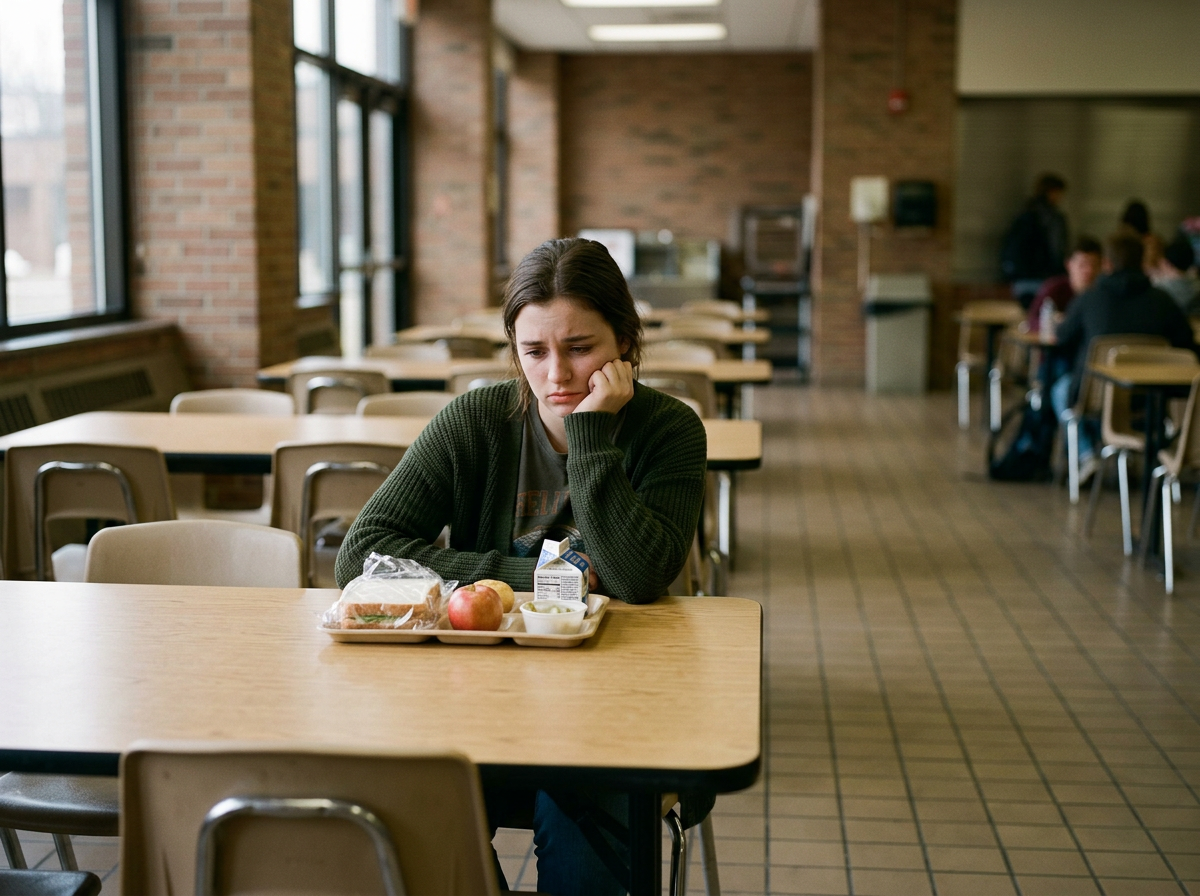
Lunch can be very difficult for many of my clients. The cafeteria is overwhelming with the number of people and the loud noises, some students are eating and others are not, there is a designated time period for meals and snacks that are often shorter than what clients are used to with the flexibility of summer. It is important to know that additional accommodations and support are an option! My client’s often talk with me about the dynamics in the lunch room, and a major topic of conversation is “comparisons”. The root of this conversation is “don’t let someone else’s eating dictate yours!”. I recognize that is very difficult for many people, but other students choices around food are not a measure of what your body needs.
Reminders to make the transition as smooth as possible:
Keep your recovery routine as consistent as possible. School getting busy doesn’t mean recovery gets put on hold!
Plan ahead for meals and snacks. Often time it is easier to pack meals and snacks to bring to school the night before to avoid the added stress of eating breakfast, getting dressed, and rushing out the door.
Talk to a safe person at school about your needs in recovery. This is often a counselor, but can also be a teacher or coach. They can be a great part of your support team!
Have an answer ready for diet/body talk. “I am not talking about food or bodies like that” or “I’d rather talk about something else”. I also remind client’s that food and body talk are going to happen. Sometimes using a mantra of “that’s not for me” is helpful when there is not the opportunity to remove yourself or reroute the conversation.
Expect some uncomfortable moments without treating them as failures. A difficult lunch, morning, or body comment does not need to derail all your hard work!
Remember, the recovery process is not linear. There are days that are easier, and days when old thoughts or behaviors become louder. Keep fighting, warrior!
Please reach out to Lotus Therapy Group if you or someone you love is struggling. We will tailor a treatment plan specifically designed for you! Contact us at Lotus Therapy Group, 708-552-7330 or email us at lotustherapygroup@gmail.com.