When we feel anxious, our first thoughts often sound something like:
“How can I get rid of this?”
“How long is this going to last?”
“I can’t do this.”
“This is too much.”
These thoughts make sense. Anxiety, in its helpful and intended form, is designed to alert us to potential danger. When anxiety is working as it should, it helps us respond to situations that could threaten our safety, such as a fire, an injury, or physical conflict.
Imagine a fire alarm going off in your home. Your body responds with an urgent message: “Hey! Look at that! Danger! Do something!” You run out of the house and call 911. The fire department arrives, puts out the fire, and you are safe.
Your brain and body learn from this experience. In a sense, your nervous system gets the message: “That anxiety helped us respond to a real danger and stay safe.”
The next time the fire alarm goes off, your body knows what to do. The alarm triggers anxiety, and you respond by taking action again.
That system is incredibly useful when there is a genuine threat.

What Happens When the Alarm Goes Off Without a Real Threat?
The problem is that our brains and bodies can sometimes begin responding to situations that feel dangerous even when they aren't actually dangerous.
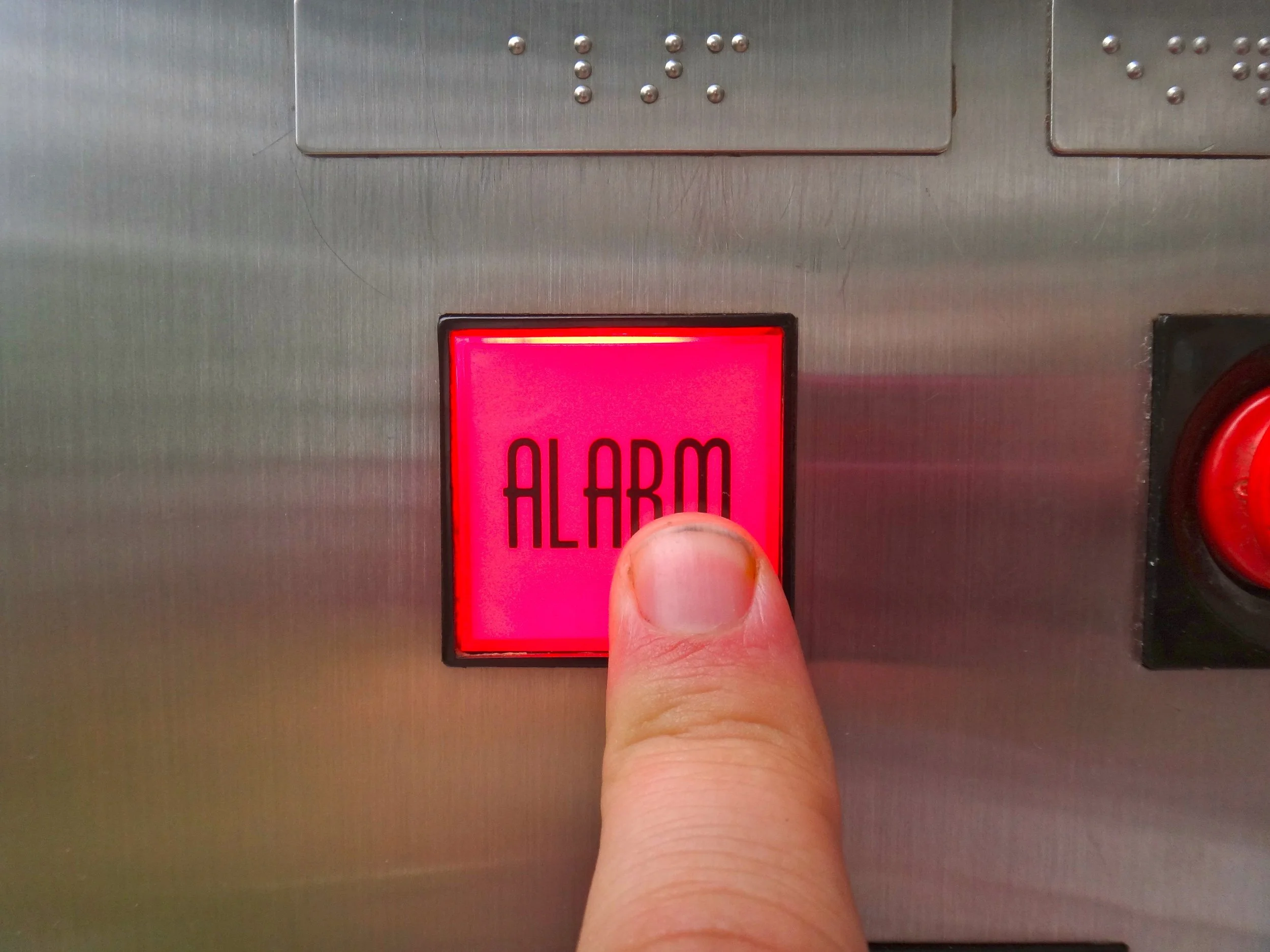
It can be a little like a smoke alarm that becomes overly sensitive. Instead of responding only when there is a fire, it starts going off when someone makes toast.
For example, imagine you are swimming in the ocean when something brushes against your leg.
You think,
“Ahh! What if that's a shark?”
Your heart begins to race. You become hyperaware of every sensation in the water. Suddenly, you notice more things touching your legs. Your fear increases, and you quickly get out of the water.
Once you're safely on the beach, your anxiety gradually decreases. You feel better.
Your brain may then learn an important lesson from that experience: “Getting out of the water made the anxiety go away. Maybe the water really was dangerous.”
The next time you go to the beach, your anxiety may show up even faster. You might scan the water for sharks, avoid swimming, or decide not to go into the ocean at all.
Over time, avoidance and other safety behaviors can unintentionally reinforce the belief that the situation is dangerous.
And that can become a real problem.
Maybe you live near the beach. Your friends and family love swimming, but you stay on the shore because getting into the water feels too overwhelming. Eventually, anxiety isn't just affecting how you feel in the moment—it's getting in the way of activities and relationships that matter to you.

So, What Can We Do?
We could tell our friends and family they can't go swimming.
We could continuously scan the water for sharks.
We could avoid the beach altogether.
But these strategies may provide short-term relief while keeping the anxiety cycle going. When we consistently avoid situations or rely on behaviors to make anxiety go away, our brains may never get the opportunity to learn that we can tolerate the discomfort and that the situation may not be as dangerous as we initially believed.
This is why the goal of anxiety treatment isn't necessarily to get rid of anxiety.
Instead, therapy can help you change your relationship with anxiety and learn that you can experience uncomfortable thoughts, feelings, and physical sensations without automatically needing to escape them.
Learning That You Can Handle Anxiety
Effective treatments for anxiety disorders often involve gradually approaching feared situations rather than continually avoiding them. One approach is exposure and response prevention, in which a person works with a therapist to gradually and intentionally face situations they fear or avoid.
The goal isn't to force yourself into overwhelming situations or to prove that nothing bad could ever happen.
Instead, through gradual practice, you can begin to learn:
“I can handle this feeling.”
“I don't have to immediately escape.”
“Anxiety can be uncomfortable without being dangerous.”
“I can continue doing things that matter to me, even when anxiety shows up.”
Over time, these experiences can help build confidence and reduce the power anxiety has over your choices.
Three Ways to Start Changing Your Relationship With Anxiety
1. Get Curious About Your Anxiety
Rather than viewing anxiety as something you have to defeat, try getting curious about what it's trying to tell you.
You might think of anxiety as an overly sensitive alarm system. It is trying to protect you, even when its warning isn't necessary.
Instead of “How do I make this stop?”, you might try asking:
“What is my anxiety predicting right now?”
“What am I afraid might happen?”
“What do I usually do when I feel this way?”
2. Take Small, Gradual Steps Toward What You Fear
Avoidance can make anxiety feel more powerful over time. With appropriate support, gradually approaching situations you fear can give you opportunities to build confidence and learn that you can tolerate discomfort.
These steps don't have to be huge. In fact, starting small can be an important part of the process.
3. Practice Accepting Distress Instead of Fighting It
Anxiety often becomes more distressing when we are also fighting against the fact that we're anxious.
Acceptance doesn't mean liking anxiety, giving up, or deciding that your fears are true. It means making room for uncomfortable thoughts and feelings without allowing them to completely determine what you do.
The goal isn't to make sure you never feel anxious again.
The goal is to become more confident in your ability to experience anxiety—and still live the life you want to live.
Anxiety may still show up.
But it doesn't always have to be in charge.

You Don't Have to Navigate Anxiety Alone
If anxiety is beginning to interfere with your relationships, work, school, daily activities, or ability to do the things that matter to you, you don't have to figure it out on your own.
At Lotus Therapy Group our therapists work with clients experiencing anxiety and related concerns in a supportive, collaborative environment. Therapy can provide a space to better understand your anxiety, identify patterns that may be keeping the cycle going, and develop practical skills for responding to difficult thoughts and feelings.
You don't have to wait until anxiety disappears before you start living your life. If you're ready to explore whether therapy could be helpful, reach out to Lotus Therapy Group, 708-552-7330 or email us at lotustherapygroup@gmail.com to connect with a therapist or learn more about our services.
This article is for educational purposes and is not a substitute for individualized mental health care. Treatment approaches and recommendations should be discussed with a qualified mental health professional.