Hosting this holiday season? You can help create a more welcoming environment by keeping conversations away from diets, weight loss, body comparisons, and food guilt. Instead, focus on traditions, shared experiences, and meaningful connection.
Let's leave diet culture off the holiday guest list.
Less talk about weight. Less food guilt. More connection, meaningful conversations, and memories.
The holidays should be about connection, celebration, and making memories - not food guilt, weight loss, or body comparisons. From navigating unsolicited comments about your appearance to responding to diet talk around the holiday table, learn how to set boundaries, shift conversations, and create a more body-inclusive holiday season where everyone can feel comfortable showing up as they are.

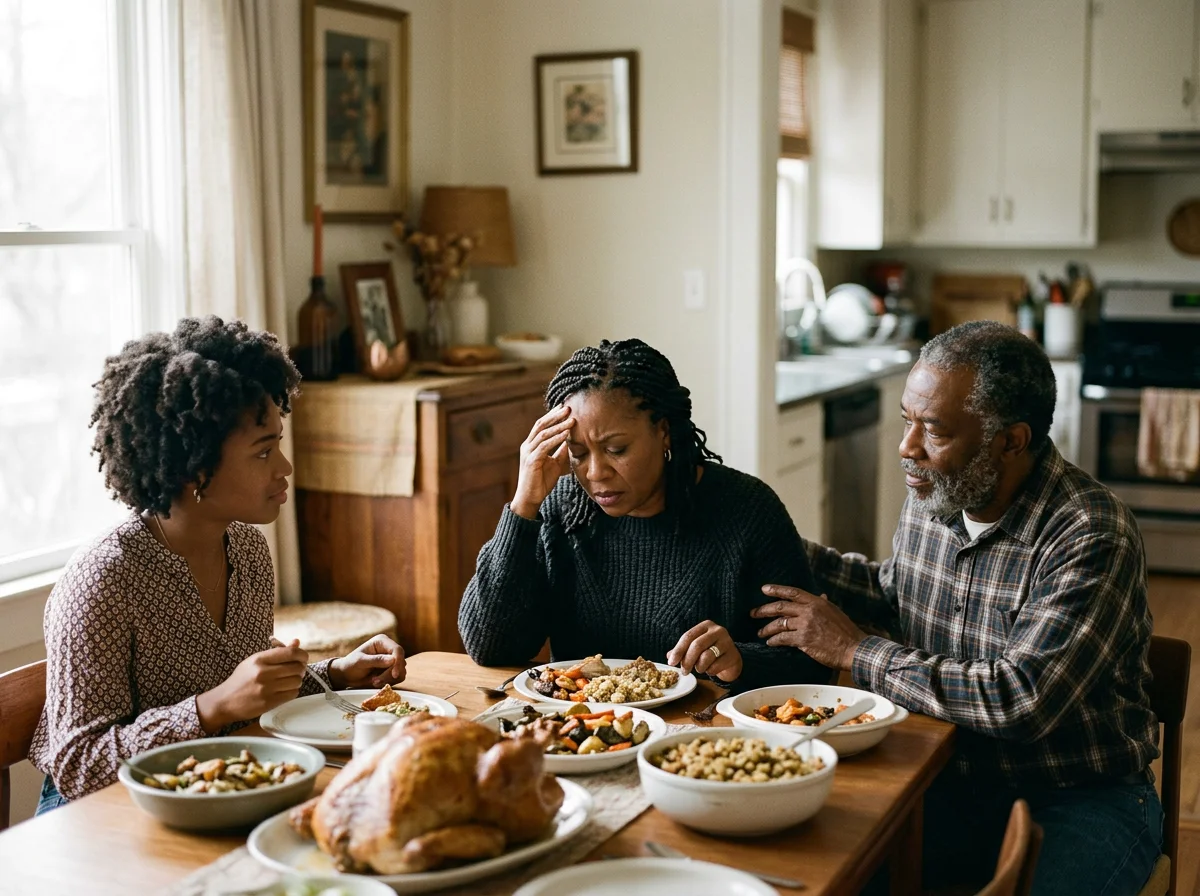
The holidays are often described as a time for connection, celebration, and making memories with the people we love. But for many people, holiday gatherings can also bring unexpected stress surrounding food, body image, weight, and appearance.
Between comments about holiday indulgences, conversations about dieting before the new year, observations about someone's body, and discussions about how much exercise is needed to "work off" a holiday meal, diet culture can find its way into even the most joyful celebrations.
These comments are often made casually, sometimes even with good intentions. However, they can reinforce harmful messages about food, body size, and self-worth. For individuals navigating eating disorder recovery, body image concerns, or a complicated relationship with food, these conversations can feel particularly difficult.
This holiday season, consider a different approach: shifting the focus away from food rules, weight, and appearance and toward connection, gratitude, shared experiences, and the things that make the holidays meaningful.

Recognizing Diet Culture During the Holidays
Diet culture is the set of societal beliefs that places value on thinness, promotes weight loss as a measure of health or success, and assigns moral meaning to food and eating behaviors.
During the holidays, it can show up in subtle and not-so-subtle ways:
"I'm going to have to be good tomorrow after eating all of this."
"I've been so bad with all the holiday treats."
"I shouldn't be eating this, but it's the holidays!"
"I'm going to start my diet January 1st."
"I need to get to the gym to burn off everything I ate."
"You've lost weight! You look great!"
"I'm definitely going to need to loosen my pants after this meal."
"I can't believe how much I ate."
Even comments that seem harmless can reinforce the idea that food choices determine our worth, bodies should be constantly monitored, and eating requires compensation.
One of the most meaningful things we can do is become more aware of the language we use and the messages we unintentionally reinforce.
Shifting the Conversation: What to Say Instead
Changing the conversation doesn't mean avoiding meaningful discussions or policing every word. It means becoming intentional about the messages we share and creating opportunities for more positive, inclusive interactions.
Here are some ways to replace appearance- and diet-focused comments with connection-focused conversations.
Instead of commenting on someone's body or weight:
"You look so thin!"
"Have you lost weight?"
"You look amazing!"
Try:
"It's so good to see you!"
"I've missed spending time with you."
"I've loved hearing about everything you've been up to."
"What's been the highlight of your year?"
Instead of labeling food as good, bad, healthy, or unhealthy:
"I've been so bad today."
"I shouldn't be eating this."
"I can't believe I'm having seconds."
Try:
"This is one of my favorite holiday traditions."
"I'm glad we're getting to enjoy this meal together."
"Everything looks delicious!"
"I love that we get to share these foods with one another."
Instead of talking about dieting or weight loss resolutions:**
"I need to lose the holiday weight."
"I'm starting a diet in January."
"I need to get back on track."
Try:
- "I'm looking forward to prioritizing things that make me feel good."
- "I'm hoping to make more time for the people and activities I enjoy."
- "I'm thinking about what I want more of in the new year."
- "I'd love to focus on building routines that support my overall well-being."
Instead of discussing exercise as compensation for eating:
"I need to burn off this meal."
"I have to work out tomorrow after all of this."
Try:
"I'd love to get outside for a walk together."
"Would anyone like to go ice skating?"
"I'm looking forward to finding movement that feels enjoyable."

The goal isn't to replace one set of rules with another. It's to create space for food, movement, and bodies to exist without judgment.
When Someone Makes a Weight-Focused or Diet-Related Comment: How to Respond
Even when we make an effort to change our own language, we cannot control what others say. Family gatherings can bring together different generations, beliefs, experiences, and relationships with food and body image.
You may hear comments about your body, what you're eating, how much you're eating, or someone else's weight. Having a few responses prepared can help you feel more confident and less caught off guard.
You do not owe anyone an explanation about your body, food choices, or health.
Here are several approaches you can use depending on your comfort level and the situation.
Gently redirect the conversation.
If someone makes a comment about your weight or eating habits, you can acknowledge the comment without engaging in it.
Try:
"I'd actually rather not talk about weight. Tell me about your new job!"
"Let's talk about something more fun. What are you looking forward to this year?"
Set a clear boundary.
Sometimes a more direct response is necessary, especially when comments are repeated or make you uncomfortable.
Try:
"I'm prefer not to discuss my weight or eating habits."
"My body isn't something I want to discuss."
Remember, a boundary doesn't need to be lengthy, defensive, or accompanied by an explanation.
Use humor when it feels appropriate.
Humor can be an effective way to shift the conversation without creating additional tension.
Try:
"The only thing I'm trying to gain this holiday season is more time with family!"
"I'm officially retiring from holiday food guilt!"
Disengage when necessary.
Not every comment requires a response. Sometimes the healthiest choice is to change the subject, step away, or find someone else to connect with.
You are allowed to protect your emotional energy, particularly during gatherings that feel challenging.
Supporting Someone Who May Be Struggling
We may not always know how someone is feeling about their body or relationship with food. A comment that seems insignificant to one person may be deeply distressing to another.
If you know someone navigating eating disorder recovery, body image concerns, or food-related anxiety, small acts of awareness can make a meaningful difference.
Consider these ways to create a more supportive environment:
- Avoid commenting on bodies. This includes compliments about weight loss, observations about weight gain, and comments about how someone looks.
- Don't monitor someone's plate. Avoid commenting on portion sizes, food choices, seconds, or how much someone is eating.
- Avoid food policing. Refrain from labeling foods as good, bad, clean, guilty, or indulgent.
- Don't encourage compensation. Avoid suggesting someone needs to exercise, skip a meal, or eat differently to make up for holiday eating.
- Respect individual boundaries. If someone asks to change the subject, honor that request without questioning or challenging it.
- Make room for flexibility. Recognize that everyone's relationship with food is different. Avoid assumptions about what someone should or shouldn't eat.
- Focus on connection. Ask about hobbies, relationships, work, travel, accomplishments, and experiences rather than appearance or weight.
Most importantly, remember that support doesn't require you to have the perfect words. Sometimes it simply means listening, being mindful, and allowing others to experience the holidays without judgment.
Creating New Holiday Traditions
What if we made this holiday season less about what we eat, how much we weigh, or how we look and more about how we connect?
Consider intentionally creating conversations and traditions that celebrate experiences rather than appearances.
Ask questions such as:
What is something you're proud of from this past year?
What is something new you'd like to experience in the coming year?
What has brought you joy recently?
These conversations remind us that our value is not determined by our bodies, clothing sizes, food choices, or exercise routines.
A Final Reminder: You Deserve to Enjoy the Holidays Without Guilt
The holidays do not need to be a test of willpower, a reason to change your body, or a countdown to starting a new diet.
You are allowed to enjoy holiday foods without guilt. You are allowed to take a break from your usual routines. You are allowed to participate in celebrations without earning your dinner! Food is a part of the holidays and it is meant to be enjoyed!
You don't have to work through the challenges of the holidays alone. If you're ready to explore whether therapy could be helpful, reach out to Lotus Therapy Group, 708-552-7330 or email us at lotustherapygroup@gmail.com to connect with a therapist or learn more about our services.
This article is for educational purposes and is not a substitute for individualized mental health care. Treatment approaches and recommendations should be discussed with a qualified mental health professional.